How Freeze-Thaw Destroys Balcony Concrete
Winter is the harshest season for buildings in colder parts of the country. Beyond higher rainfall, the building envelope has to survive repeated freezing and thawing. Snow blows onto a balcony and collects there, then melts and soaks into the concrete, damaging both that balcony and the one below it.
Water is unusual among liquids. As it cools it contracts, down to about 4 degrees Celsius (39 F), then expands slightly until it reaches freezing point, and on freezing expands by roughly 9%.
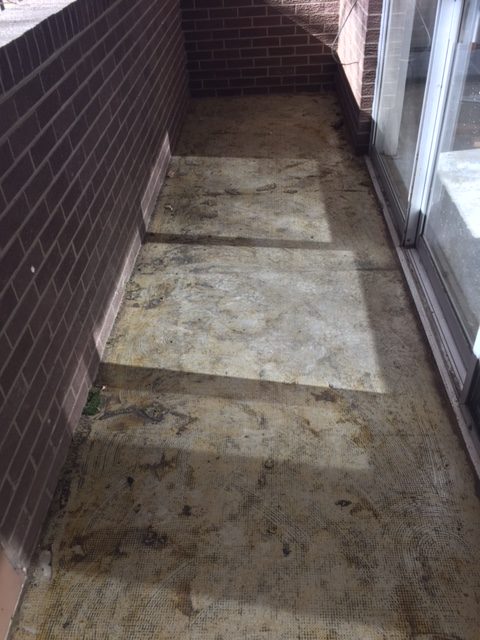
That contraction phase is what makes it destructive: it lets water work into the smallest cracks. Then the expansion phase applies enormous pressure inside those cracks, and concrete fails locally. Over repeated winters the damage deepens.
The worst case is water reaching the reinforcing steel inside the slab and starting it rusting. That is extremely expensive to repair.
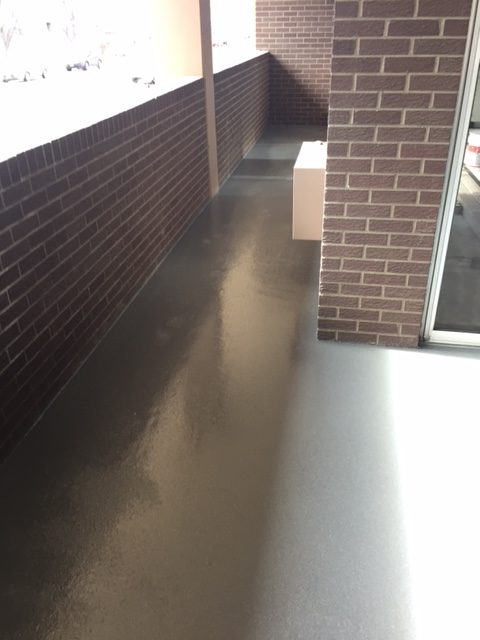
What the building needed was a coating that would penetrate deep into existing cracks, bond hard enough to stop any future moisture creep, look presentable, and stay safe underfoot in winter when an icy surface film becomes a hazard.